The craftsmanship behind Royal Selangor — 9 techniques from melting to finished object

Sleeves først — alltid
Hvert kort skal i syrefri sleeve før noe annet. Fingeravtrykk og mikroriper er den vanligste verdikilleren, og de kommer i det øyeblikket du håndterer kortet ubeskyttet.
Toploader eller binder
Kort du skal omsette eller gradere går i toploader; samlinger du blar i går i binder med sidelastede lommer. Aldri topplastede lommer i ringperm — kortene glir ut.
Skrin, mørke og stabilt klima
Oppbevar mørkt, tørt og stabilt: 40–55 % luftfuktighet og unna yttervegg. Treskrin med lokk beskytter mot både lys og støv — og ser bedre ut enn pappesker.
Forseglede bokser: ikke rør seglet
Uåpnet vare med intakt segl er verdt mest. Oppbevar boksen i original krympeplast, gjerne i beskyttende case, og løft aldri i plasten.
Pewter shaped by human hands for over 130 years
Behind each Royal Selangor piece — whether it is a simple cup or a complex figure — lies ten to twenty hours of manual work. Since 1885, the pewtersmiths of Setapak, Kuala Lumpur, have refined nine basic techniques that together define Royal Selangor as the world's premier pewter craft. Here is a review of them all.
Nine basic techniques
Casting, scotching, filing, hammering, hand-engraving, polishing, buffing, etching and assembling.
Techniques over 130 years
Each technique has been passed down from master to apprentice since 1885 — a living tradition.
No shortcuts are taken
Even simple products pass through 10+ manual steps. Royal Selangor never compromises.
1. Casting

Everything begins with casting. Liquid tin — heated to around 230–280 °C in an electric melting furnace — is carefully poured into sand molds or centrifugal molds made from original models. Royal Selangor uses the highest international tin: 92-97% pure tin, with a small proportion of copper and antimony added to strengthen the alloy. The result is a heavy, solid casting with the perfect proportions of the finished product.
Centrifugal casting is used for complex details — by spinning the mold at high speed, the liquid metal is pushed out into all corners and ensures sharp details even in the smallest ornaments.
2. Filing (Filing)

After the stock has cooled and is taken out of the mould, the filing work begins. With precision files, the tinsmith removes casting seams, redundant edges and impurities that occur in the mold. This is the art of patience — too little filing and the surface becomes uneven, too much and the details disappear. Experienced tinsmiths can feel the touch alone if the filing is correct.
3. Soldering (Soldering)

Complex pieces — such as jugs with handles, dishes with feet, or figurines with loose parts — are assembled using soldering. A soldering iron with precise temperature control melts the solder metal exactly where two components meet. Years of training are required to avoid visible weld seams. Well-soldered Royal Selangor pieces have seams that are almost invisible to the naked eye.
4. Hand Polishing (Hand Polishing)
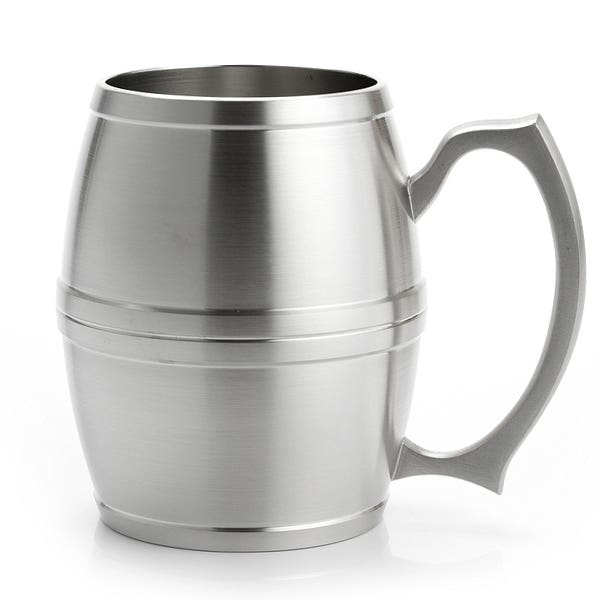
For pieces with the signature "satin lustre" finish — Royal Selangor's classic matte silver sheen — the surface is polished by hand with special polishing pads and cloths. The hand polishing produces a texture that machine polishing cannot reproduce: a subtle directional orientation that catches the light differently depending on the angle at which you hold the piece.
5. Machine Polishing (Machine Polishing)

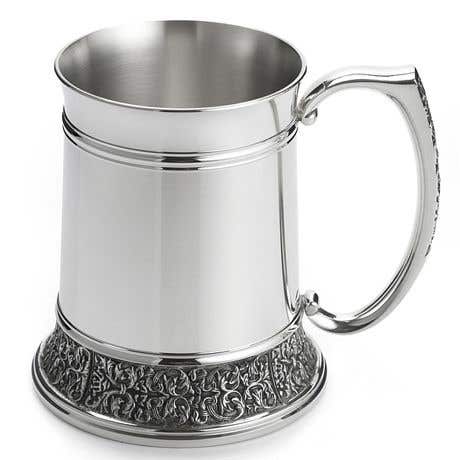
For pieces with a "brilliant finish" — the specular high-gloss surface that rivals silver — rotating polishing wheels with polishing compound are used. The machine polishing gives a depth and clarity in the reflections that is not possible to achieve by hand. Even with a machine, precision is required: too much pressure rounds off edges and destroys design details.
It is easy to produce tin. It is difficult to produce a Royal Selangor piece. And that's just the way it should be.
— Royal Selangor Craftsman, Setapak
6. Scotching (Scotching)

Scotching is the process in which the surface is textured with steel wool or scotch-brite pads to create a smooth, silky matte finish. This finish is particularly popular on modern designs and contrasts beautifully with polished details on the same piece. Scotching is always done in one direction to ensure a uniform, professional surface.
7. Hammering (Hammering)

One of the most visible craft techniques is hammering — where the pewter uses a ball point hammer to create the characteristic small indentations that give many Royal Selangor pieces their organic, vibrant surface. Each hammer stroke is individual, and the sum of hundreds of strokes per piece creates a pattern that is never quite the same twice. The hammering intensity is adjusted to vary the depth and density of the pattern.
8. Buffing (Buffing)

Buffing is the final polishing step where a soft, rapidly rotating cloth wheel — often made of flannel — with fine-grained polishing compound gives the piece its final shine. The buffing removes the last microscopic scratches and ensures that the surface is perfectly smooth. It is in the buffing step that the piece really "awakens" — the metal's natural shine emerges in full force.
9. Engraving (Engraving)

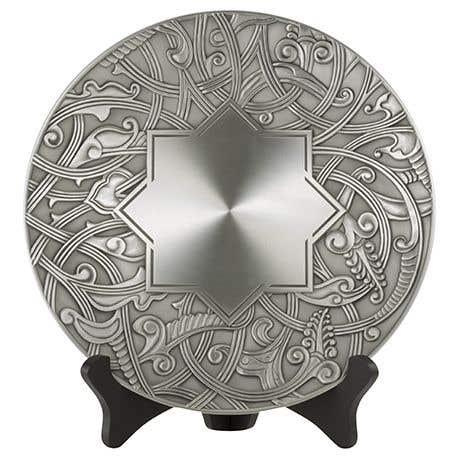
Engraving is the most personal of all techniques — and the one most often requested by customers. With a precise chisel, the tinsmith carves personal greetings, initials, dates or logos directly into the metal. Royal Selangor offers both hand engraving (for an organic, handwritten look) and machine engraving (for precise fonts and logos). An engraving is permanent and turns any piece into a unique heirloom.
The sum of techniques: a whole life in an object
What makes Royal Selangor unique is not a single technique, but the interaction of all nine. A modern collectible may have been through casting, filing, soldering, scotching and engraving — and still appear as if it were made in one piece. It is the tacit knowledge of tinsmiths, passed down through generations, that keeps these techniques alive.
The next time you hold a Royal Selangor piece, think about the hands that shaped it — and the technique behind every inch of its surface.